


01
Education
School kits, community learning programmes and awareness campaigns in remote and underprivileged areas. A child who cannot afford a bag and books usually stops attending long before anyone notices.
Four areas of work, chosen because each one changes what a family can do next year rather than only this week.
Each area was chosen because it changes what a family can do next year, not only this week.
School kits, community learning programmes and awareness campaigns in remote and underprivileged areas. A child who cannot afford a bag and books usually stops attending long before anyone notices.

Access to basic treatment and clean water for communities with no nearby facility. In Tharparkar, a working water point removes the single largest daily burden a household carries.

Ration distribution for families in need, with seasonal campaigns during Ramadan and the coldest weeks of winter, when both need and cost rise together.

Assets that generate income, so support becomes independence rather than a repeat visit. A rickshaw handed to the right family ends their need for aid entirely.
Project Noor is the name we give to the work that hands a family something lasting. Rickshaws that turn into a daily income. Warm jackets before the Thar winter. Eid gifts for children who would otherwise go without. Solar-powered water points that keep running after we leave.
Every proposal is tested against one question: what would still be helping this family six months from now?
In Diplo, Tharparkar, a settlement was walking a long distance for water of uncertain quality. We installed a solar-powered tank with taps at ground level, built as sadaqah jariyah for the late Asad Mahmood.
It needs no fuel, no grid connection and no delivery schedule. The photograph shows children drinking from it on the day it opened.
See all campaigns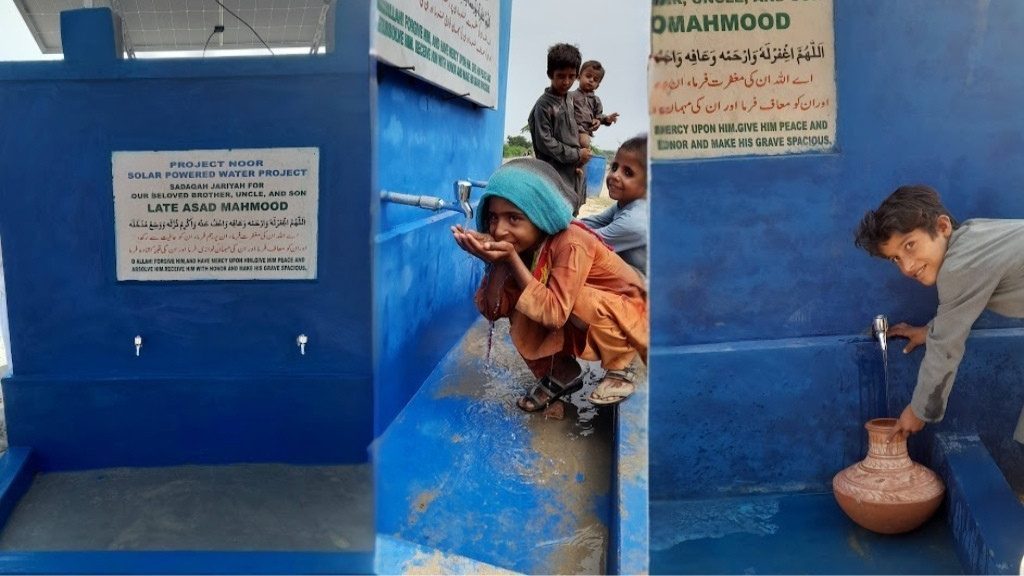
We prioritise settlements and households that sit outside the range of larger organisations.
Recurring relief has its place, but an asset that removes the need for relief is worth more.
If we cannot visit it, photograph it and account for it, we do not fund it.
A winter pack costs Rs 6,000. A child’s jacket costs Rs 900. Tell us what you would like your donation to do.